World
Palov around the world: different methods, related names
A meaningful comparison of Central Asian palov, Azerbaijani plov, Turkish pilav, Iranian polo and South Asian pulao.
Where should a comparison begin?
The most useful way to compare similarly named rice dishes is to examine their cooking methods. Is the rice boiled separately first, or cooked in a flavourful liquid? Are meat and vegetables in the same pot or prepared as a separate accompaniment? Is the dish a main course, a side or the centrepiece of a celebration?
These questions do not turn different dishes into one 'international palov' recipe. Instead, they reveal local differences more clearly. That is why the atlas retains local names rather than automatically presenting every dish as a type of Uzbek palov.
Azerbaijan: rice and accompaniment prepared separately
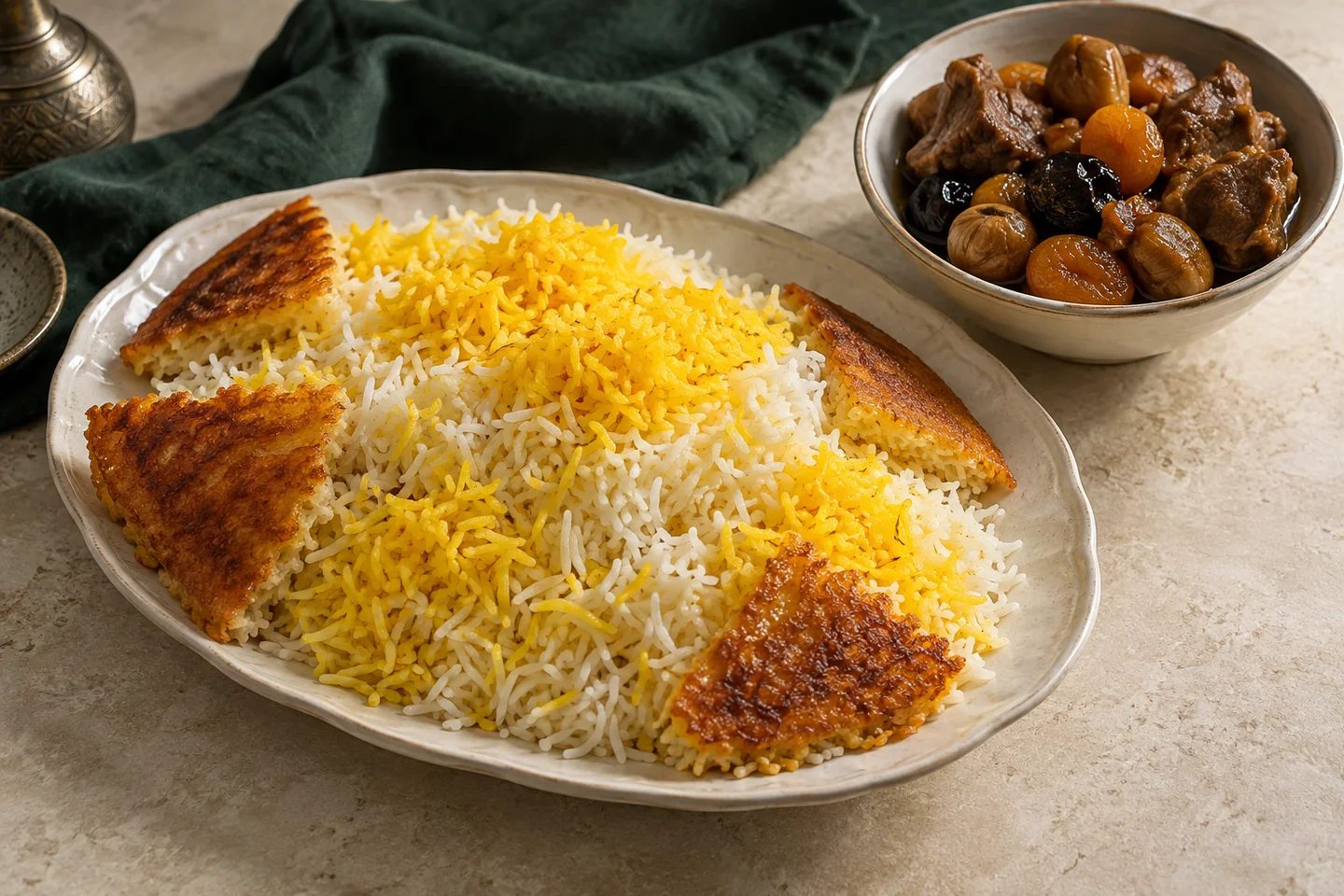
Azerbaijani plov includes dashma, suzme and dosheme methods. In suzme, rice is partially boiled, drained and then finished with fat in a covered pot; lavash may line the base. Preparing the meat and dried-fruit accompaniment separately is an important point of comparison.
Here, the rice and meat accompaniment are timed to be ready together. The base layer, the rice itself and the topping each have a distinct role in the presentation. Such practical features make the difference from palov cooked over zirvak easier to understand.
Türkiye: tavuklu pilav and Divriği pilavı
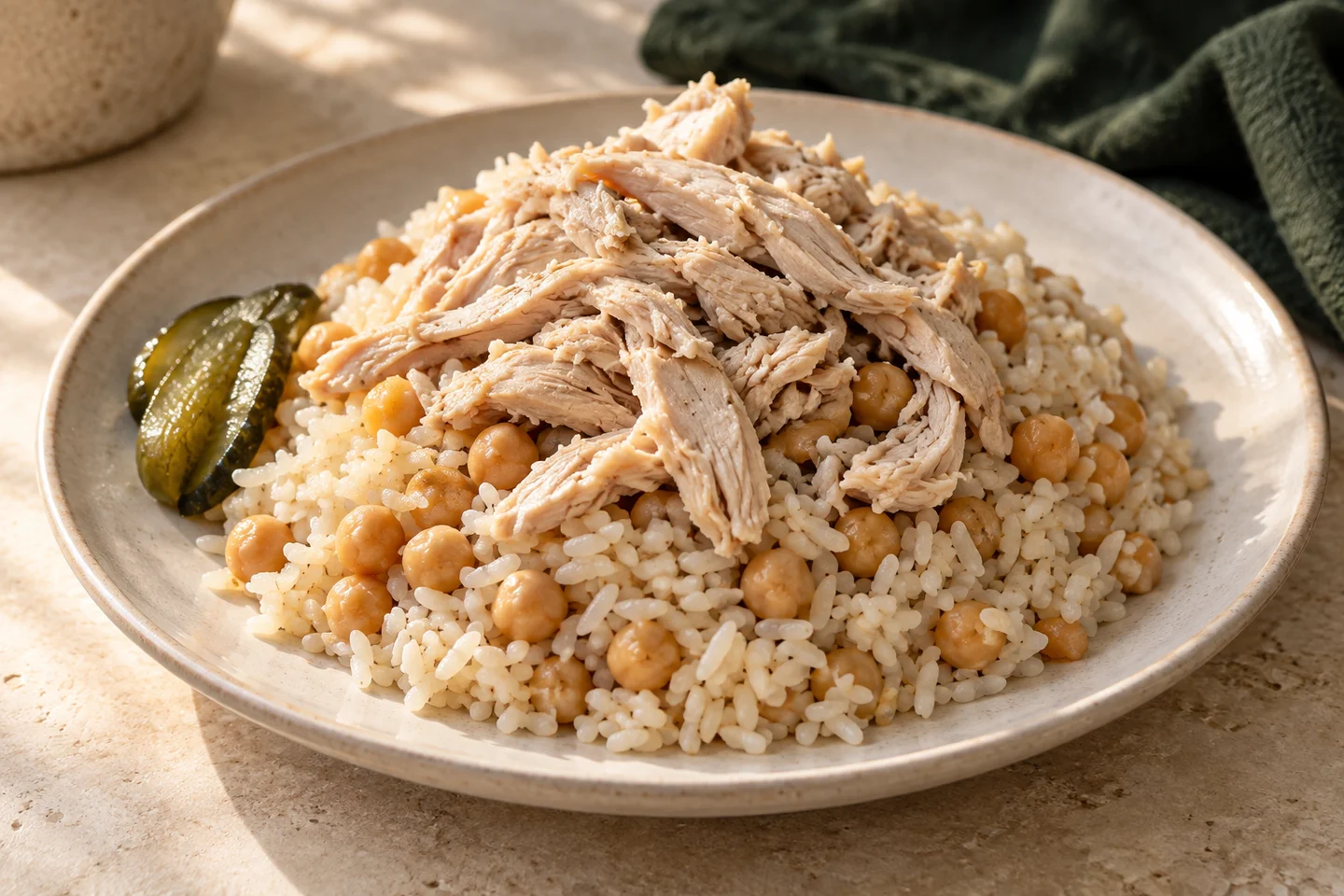
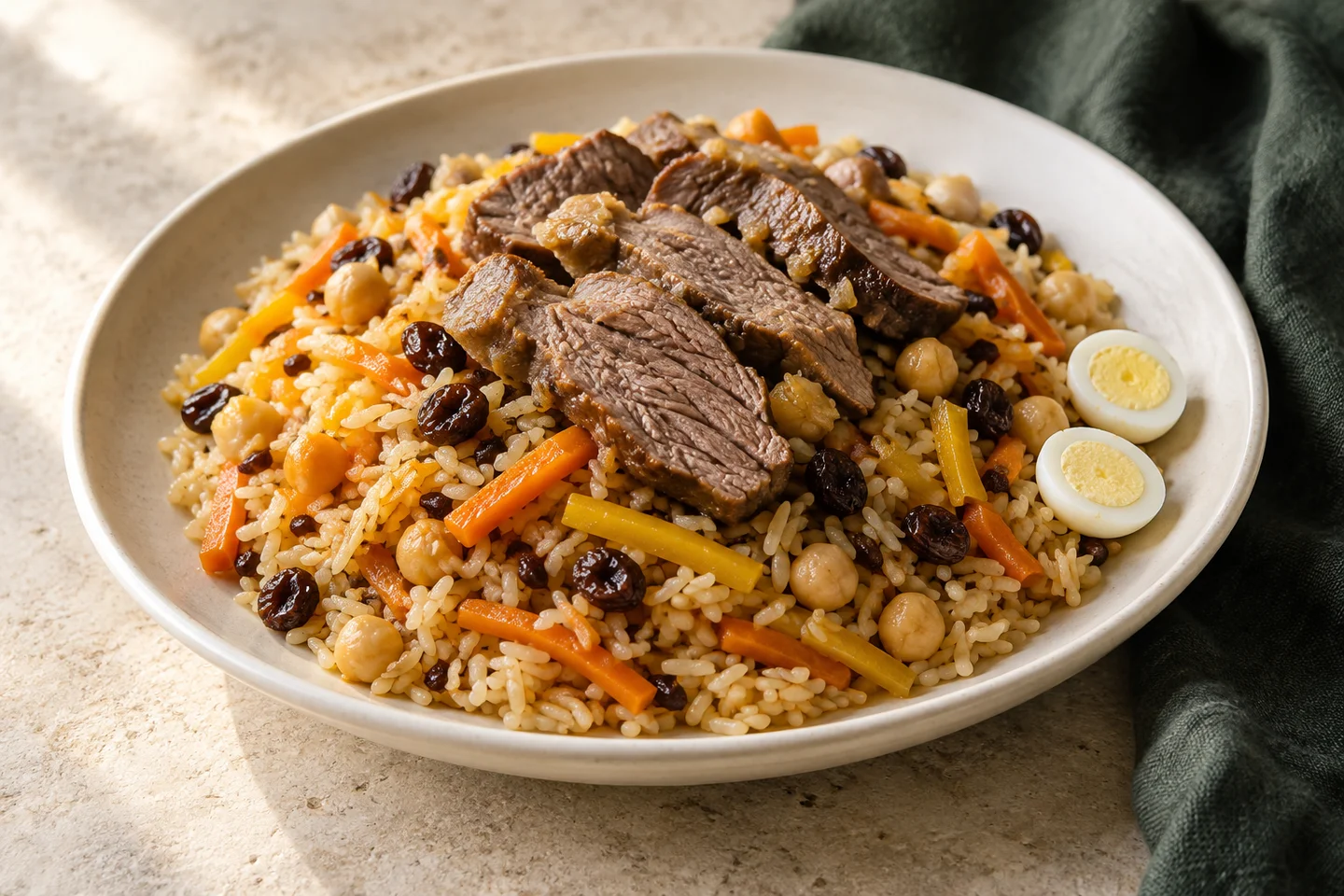
Tavuklu pilav is an urban rice dish topped with cooked chicken. Divriği pilavı is a regional example described with lamb, chickpeas, onions, raisins, butter and spices. Even within one country, then, pilav does not mean one fixed set of ingredients.
When you see a dish on a menu, it helps to find out which additions come with it. An ingredient cooked with the rice may look like one added afterwards, but the method and distribution of flavour may differ.
Iran: the vegetable and herb character of kalam polo
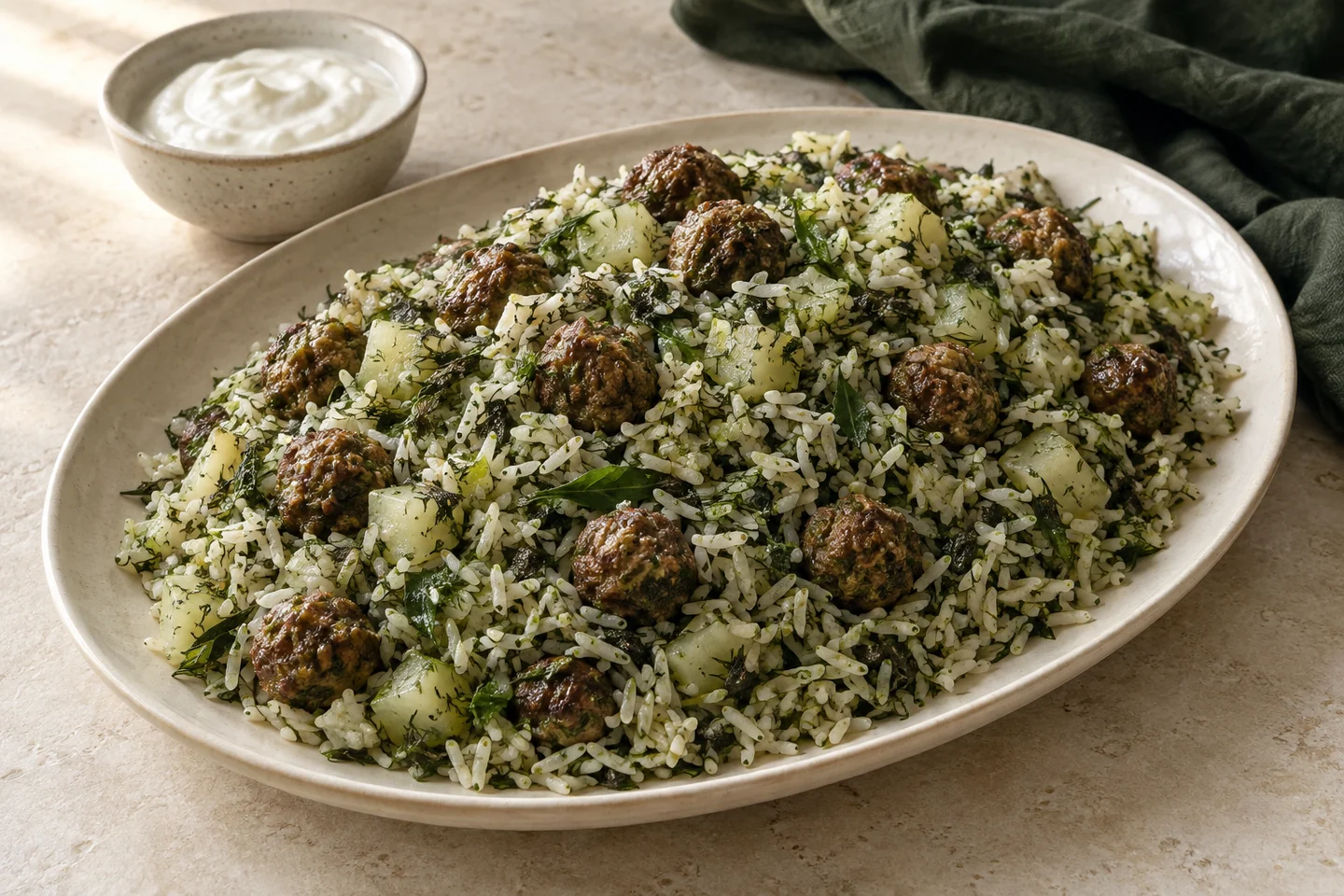
In Shiraz-style kalam polo, kohlrabi, herbs and small meatballs join the rice. Tarragon, dill, basil and leeks shape its aroma. Describing it merely as rice with meat would therefore fail to convey its character.
Kohlrabi and herbs give its aroma, colours and texture a distinctive character. When reading about a local polo, note the city or province whose method is being described; one example cannot represent all Iranian rice dishes.
India: a mountain-style pulao
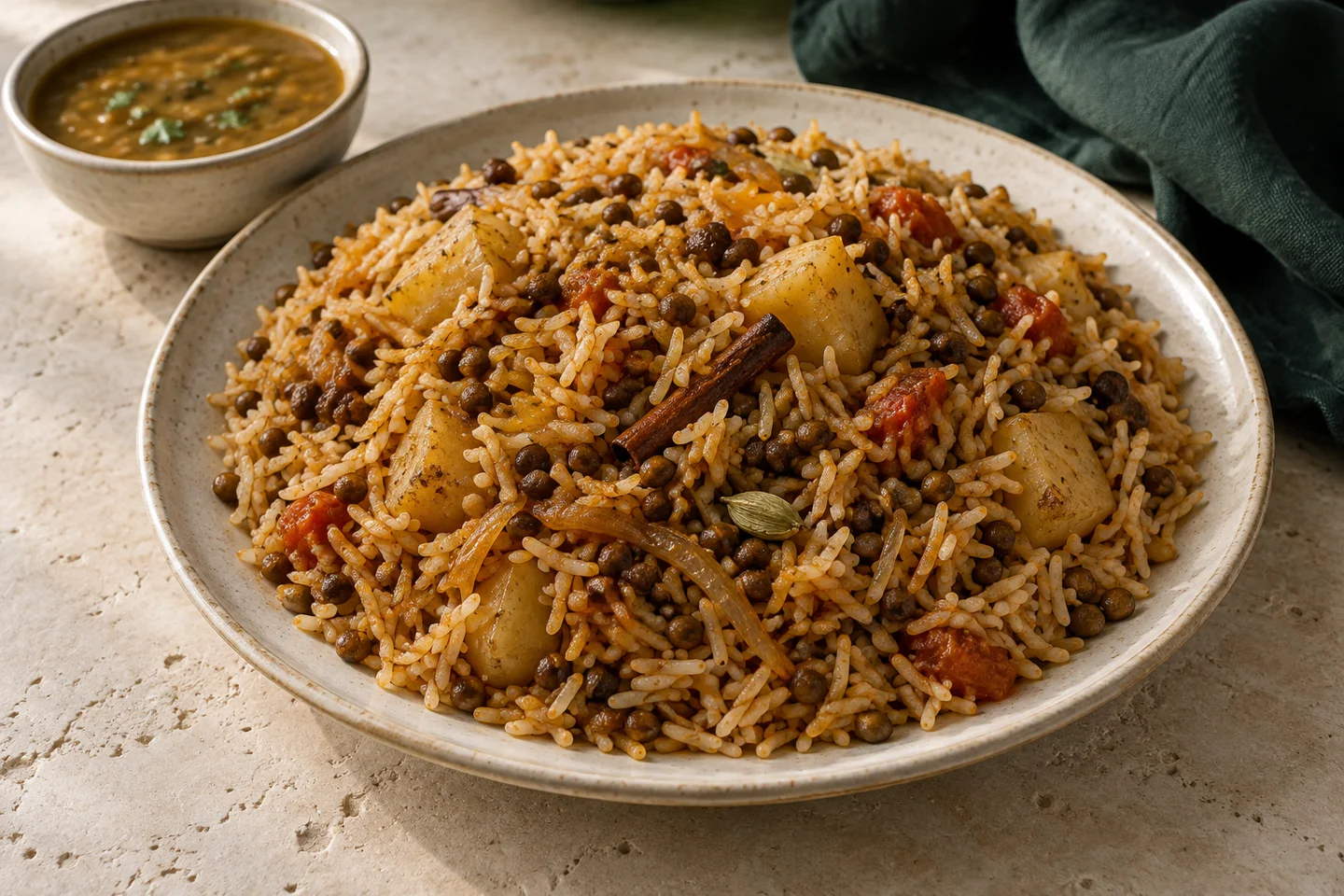
Himachal Pradesh's tudkiya bhath is described as a pulao made with rice, lentils, potatoes, yoghurt, onions, tomatoes, garlic and spices. Pulses and vegetables play a major part in its texture.
These ingredients broaden the idea that palov-related dishes always follow the same meat-and-carrot formula. Equally, pulao and biryani should not be treated as interchangeable names in every situation: look at the local description of the particular dish.
Oman and the Swahili coast
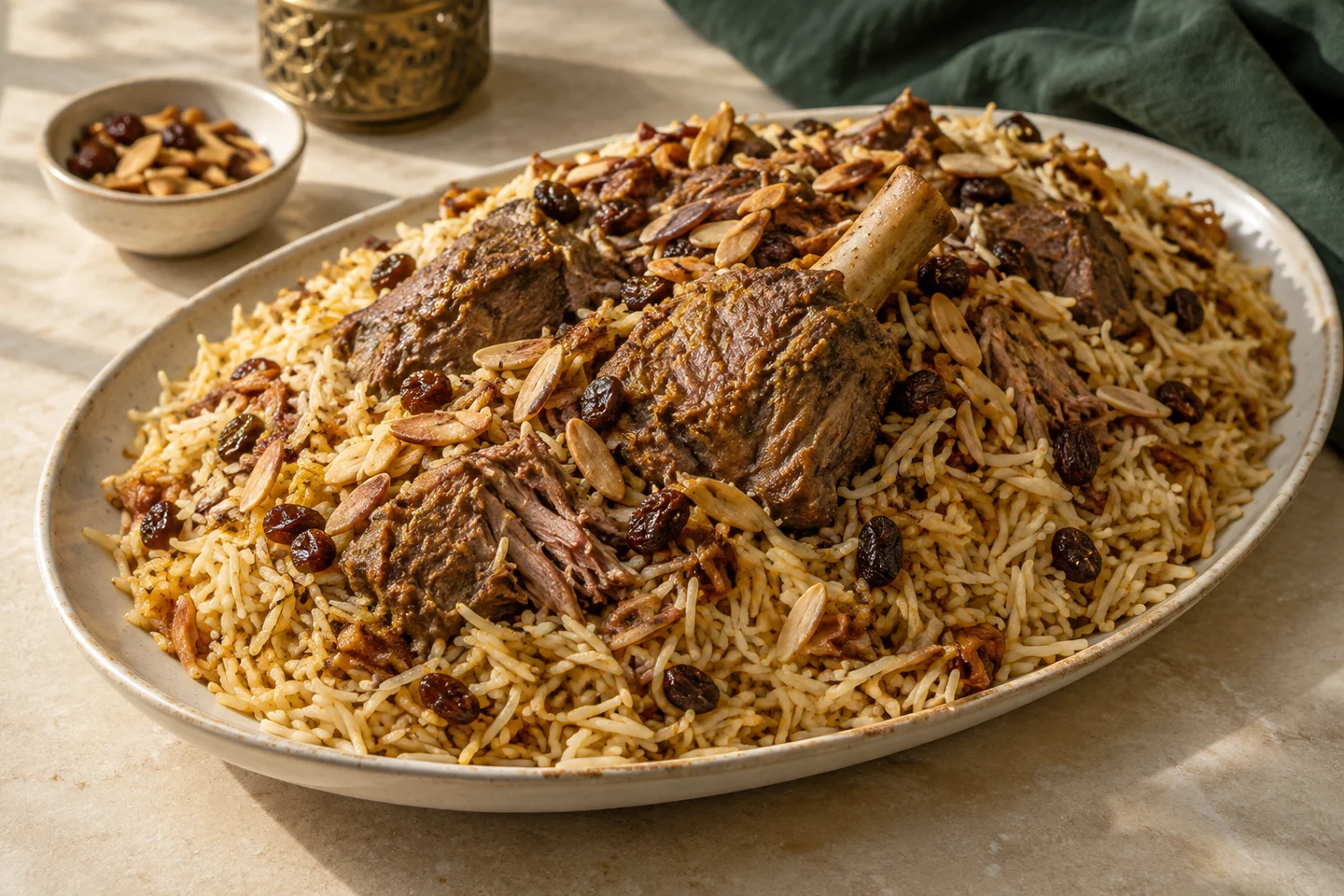
Omani qabooli brings together meat, rice, raisins and nuts. In pilau on Kenya's coast, spiced rice takes centre stage. One offers a comparison of dried-fruit and nut textures, the other the warm aromas of spices.
These examples explain why the atlas extends beyond Central Asia. A shared name or ingredient alone, however, does not establish a dish's historical origin. The site primarily compares preparation, ingredients and local context.
What comparison can teach us
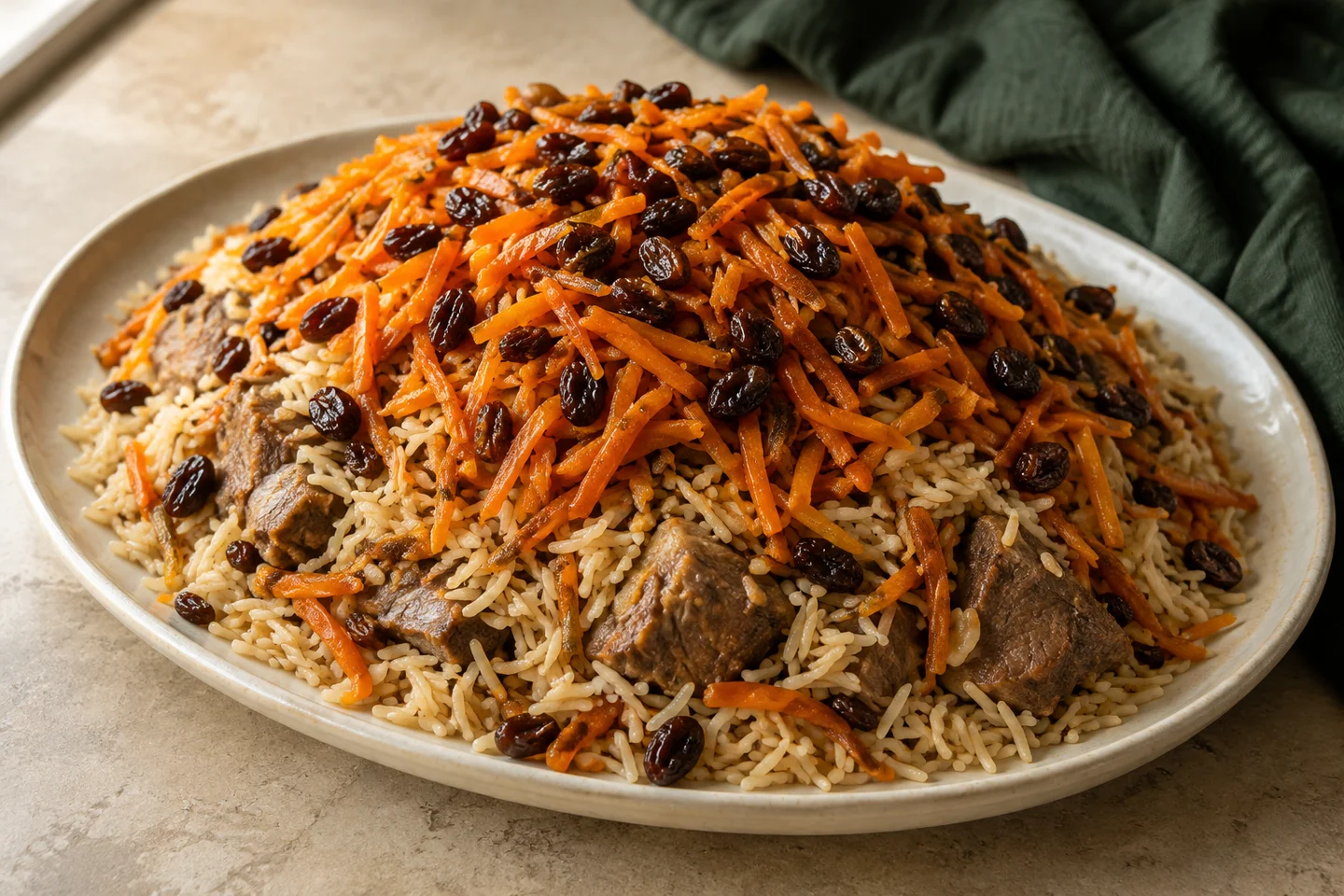
For a palov cook, comparison raises new questions: what control does cooking rice separately provide, how does a separate accompaniment change the presentation, and what do herbs or pulses add to the texture? Such questions enrich practical experience.
The aim is not to merge every recipe. Cooking each dish under its own name, with an understanding of its ingredients and method, is a practical way to respect different food traditions.