Ingredients
Palov glossary: ingredients, utensils and methods
What is zirvak, how does dam differ, and what do devzira and basmati mean? Practical explanations of 18 palov terms.
Palov / osh
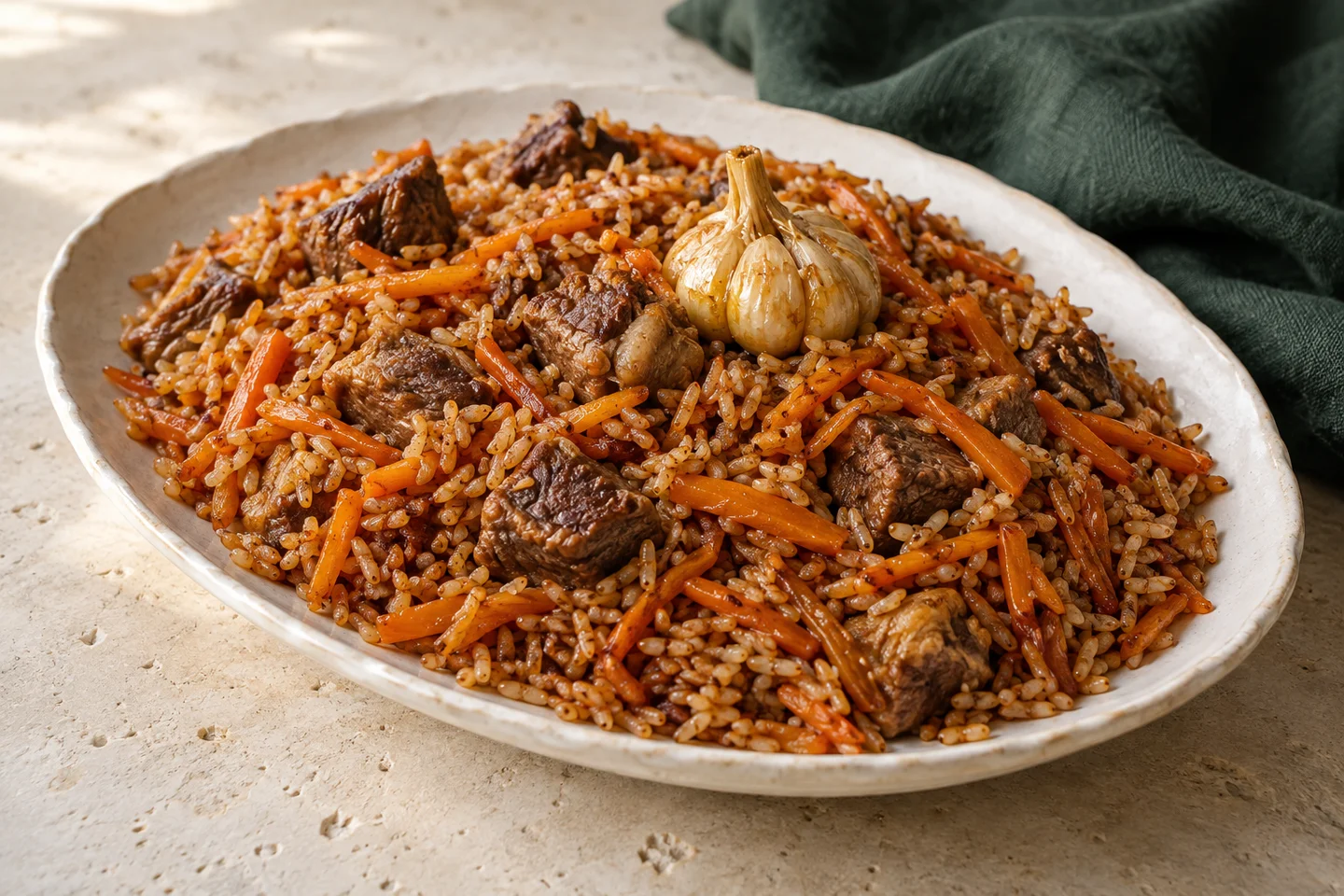
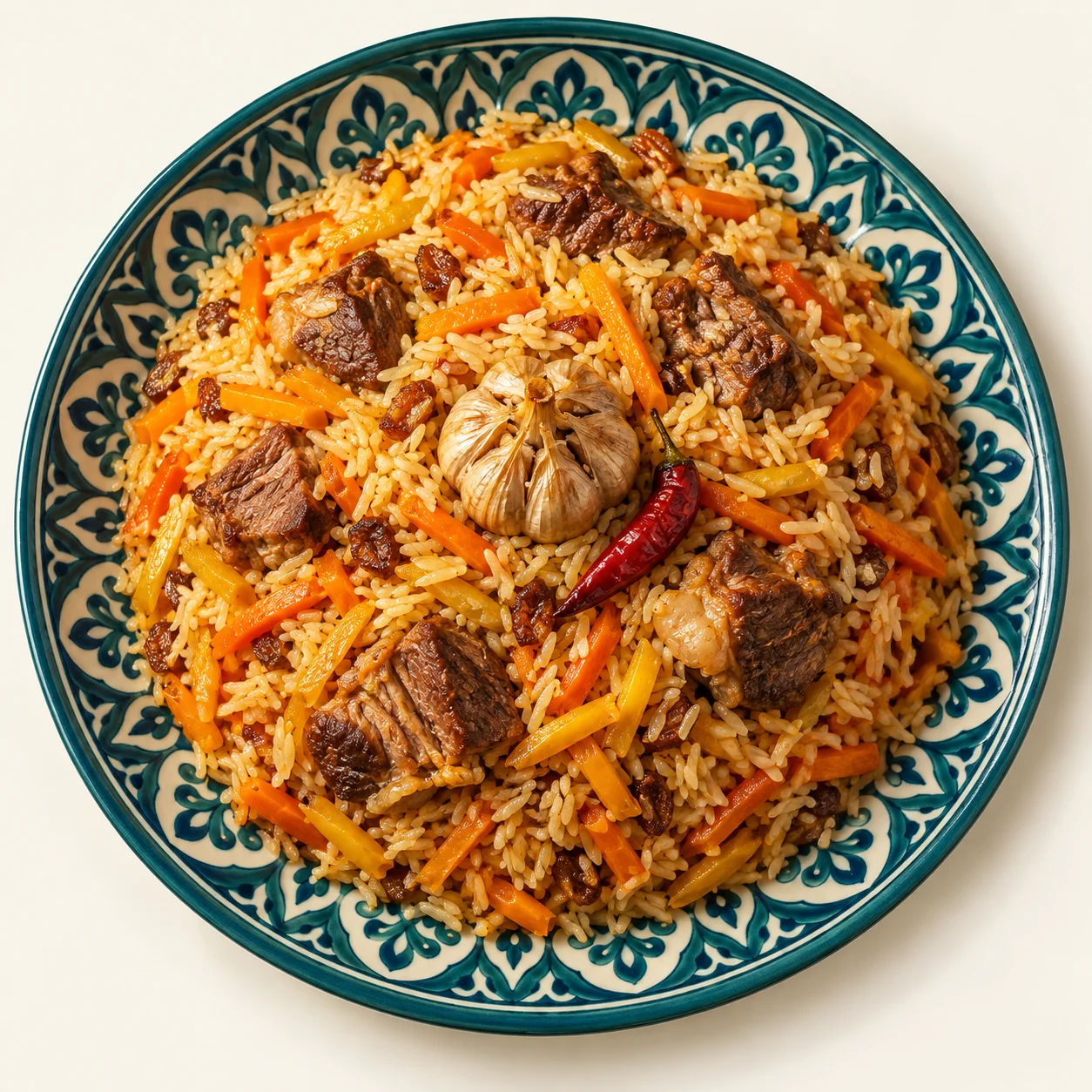
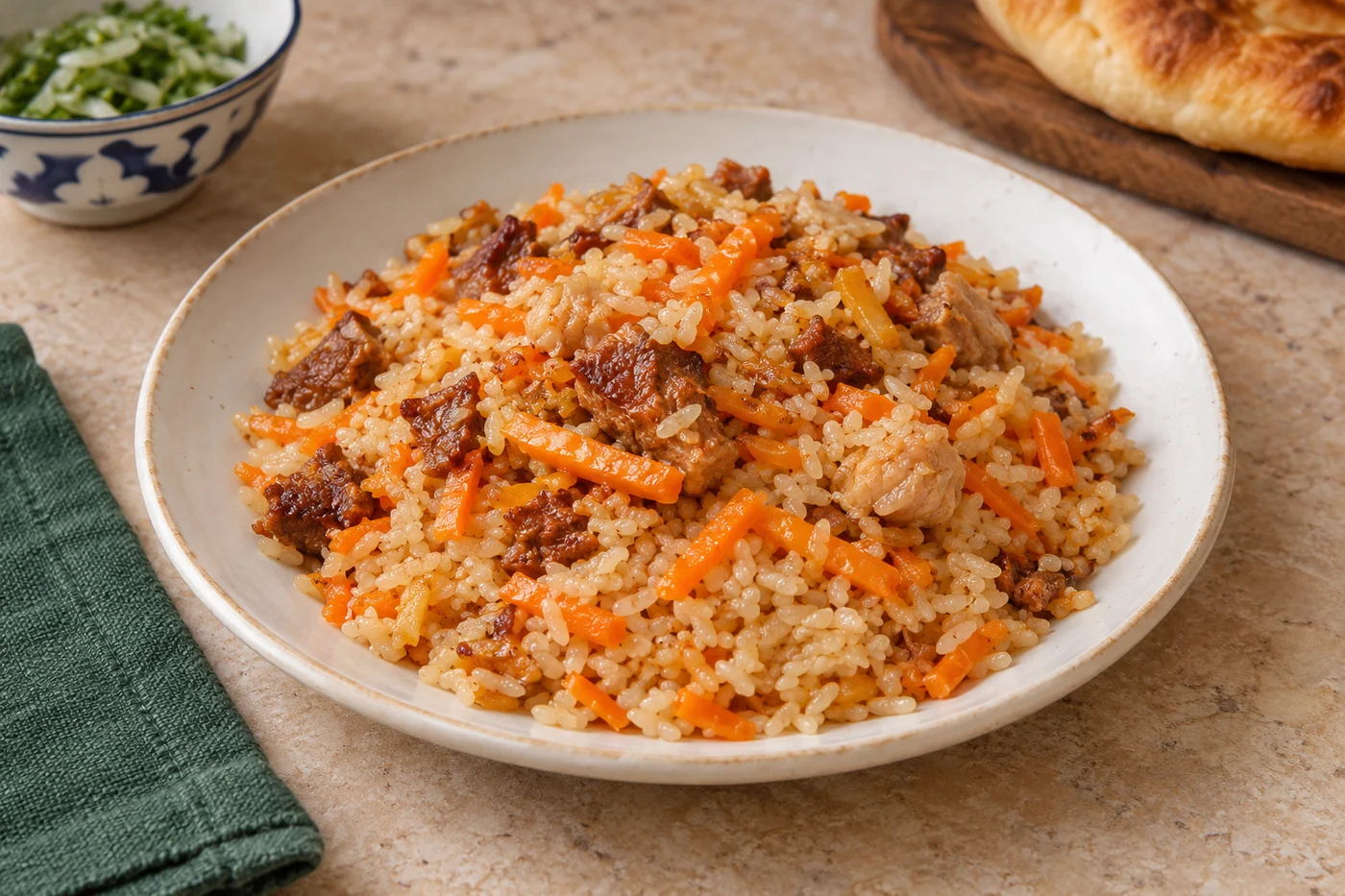
A dish centred on rice, ingredients that form a flavour base and an appropriate cooking method. In everyday Uzbek, osh often means palov; in other contexts the word can have a broader meaning.
Zirvak
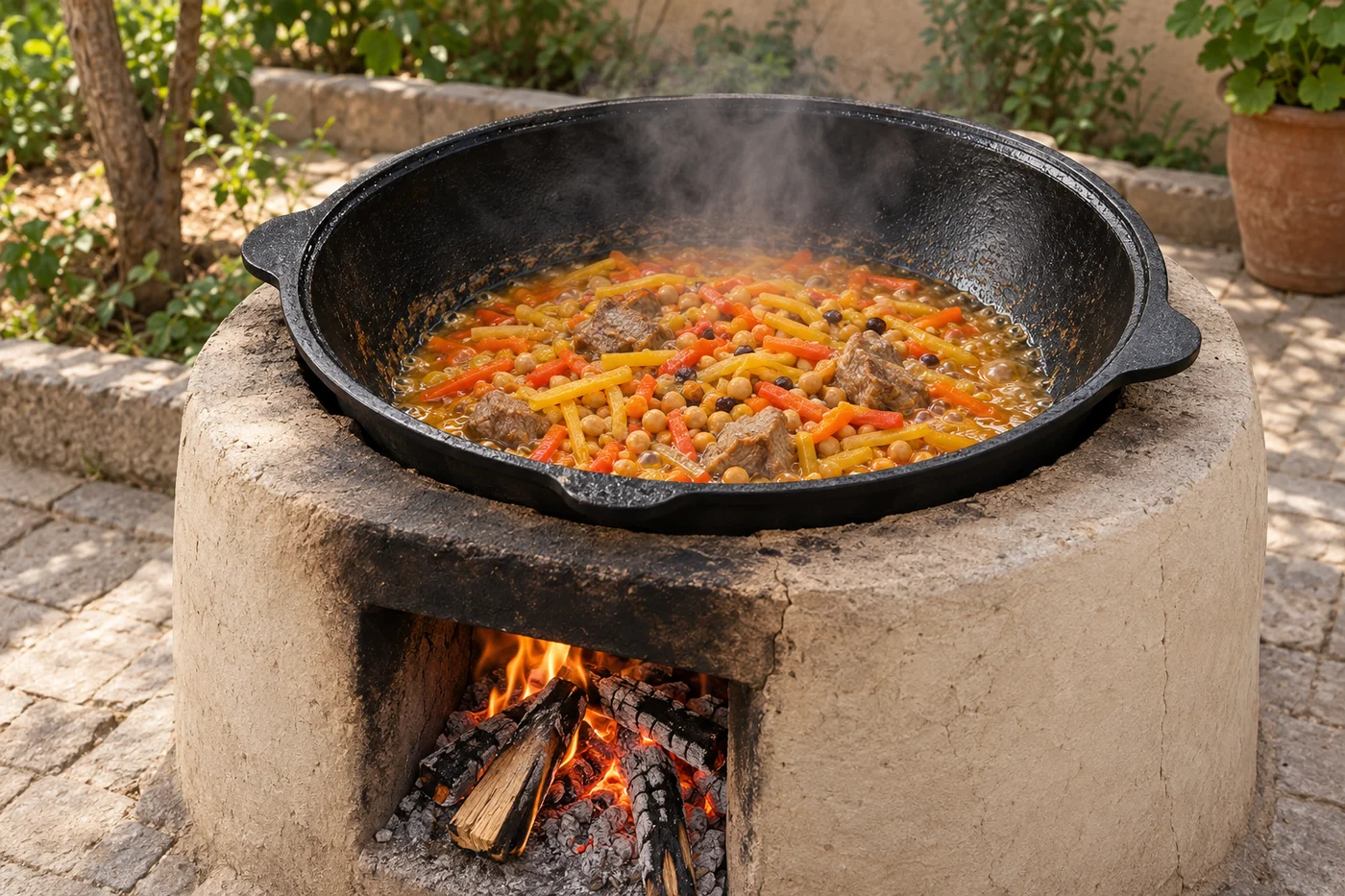
The base of meat, vegetables, fat and spices prepared before adding the rice. Its readiness affects the overall flavour at the next stage. It is part of the cooking process, not the finished palov.
Dam: final covered steaming
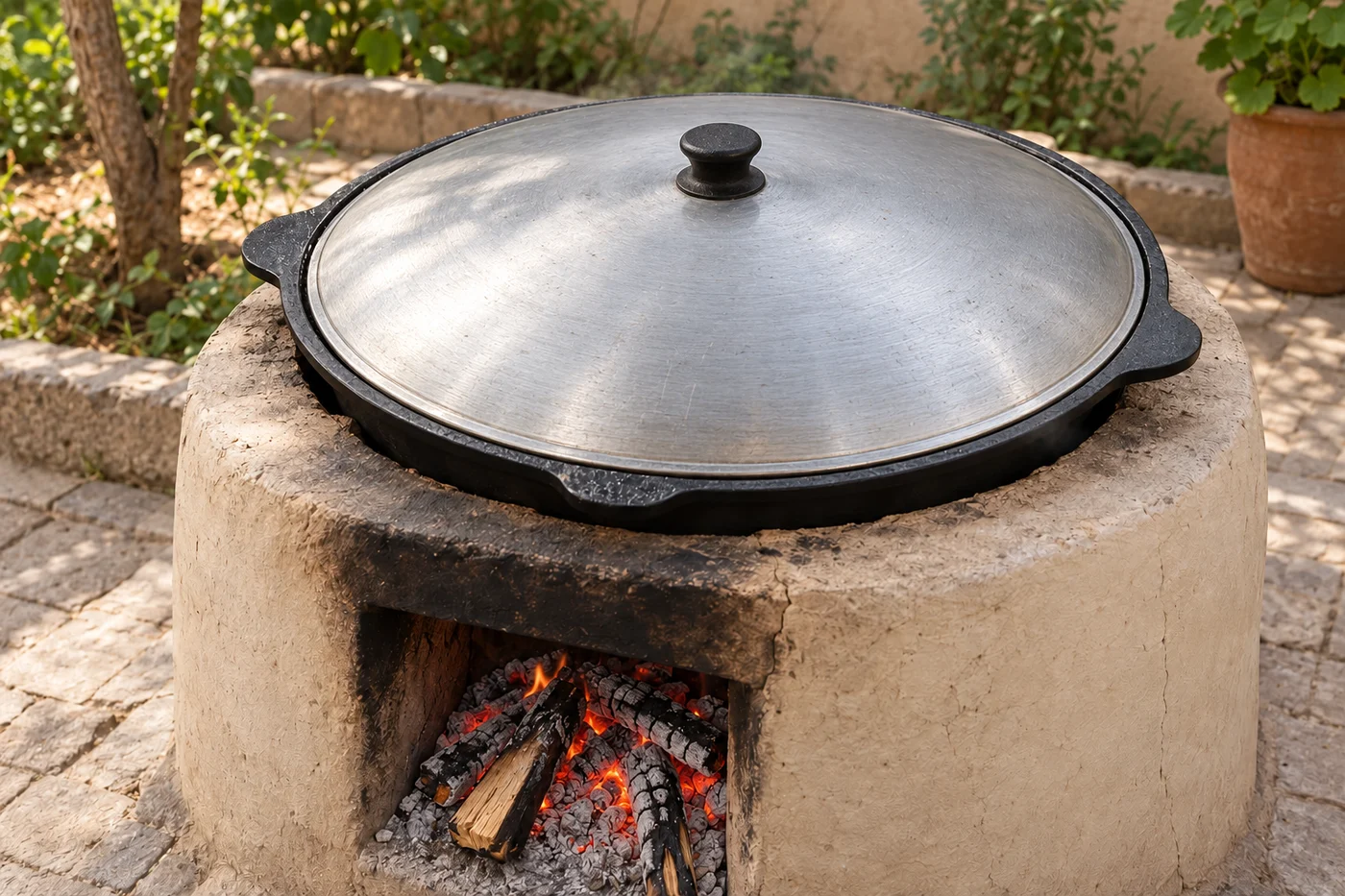
The final cooking stage under a lid, using relatively low heat and steam. It should not be confused with vigorous frying or prolonged boiling.
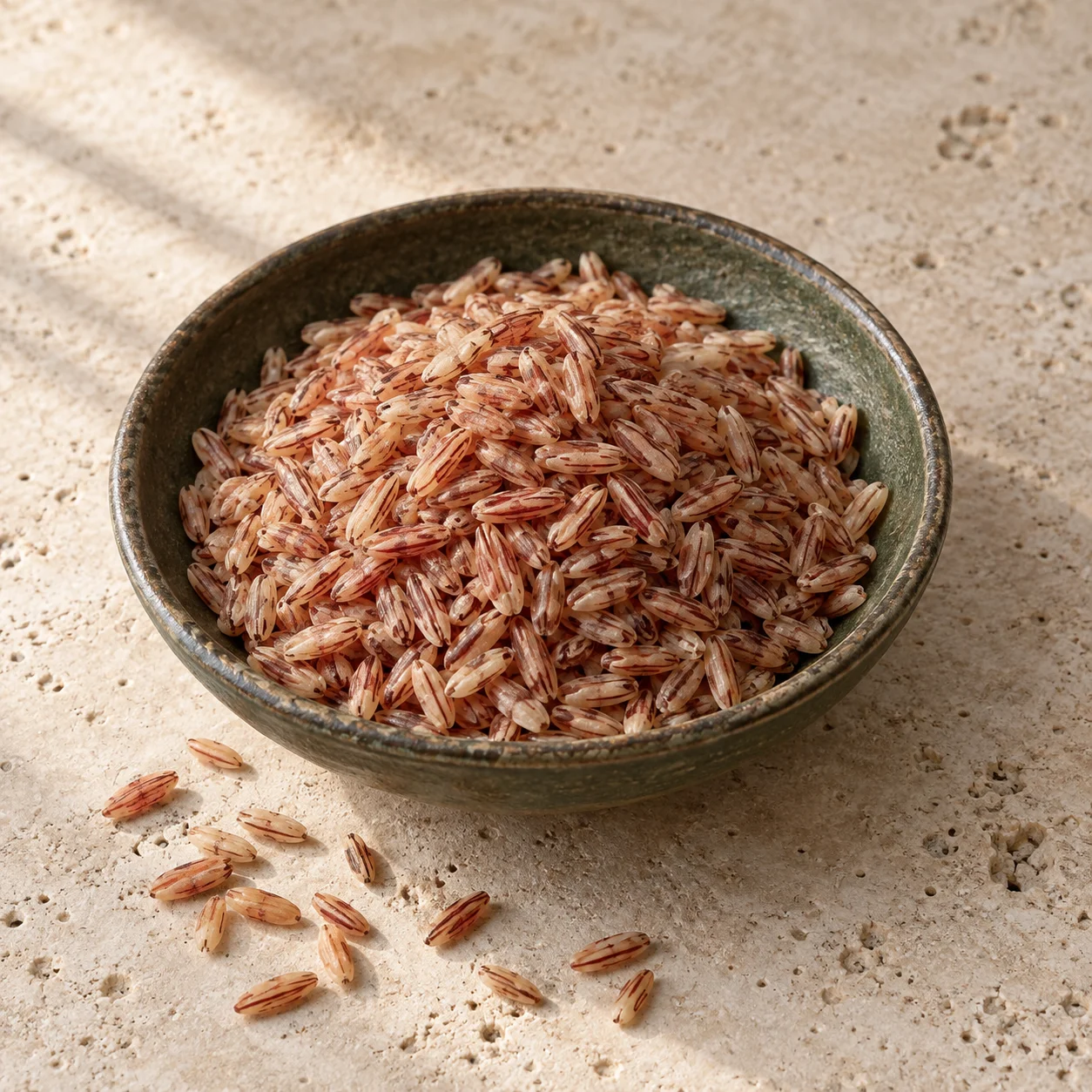
Devzira
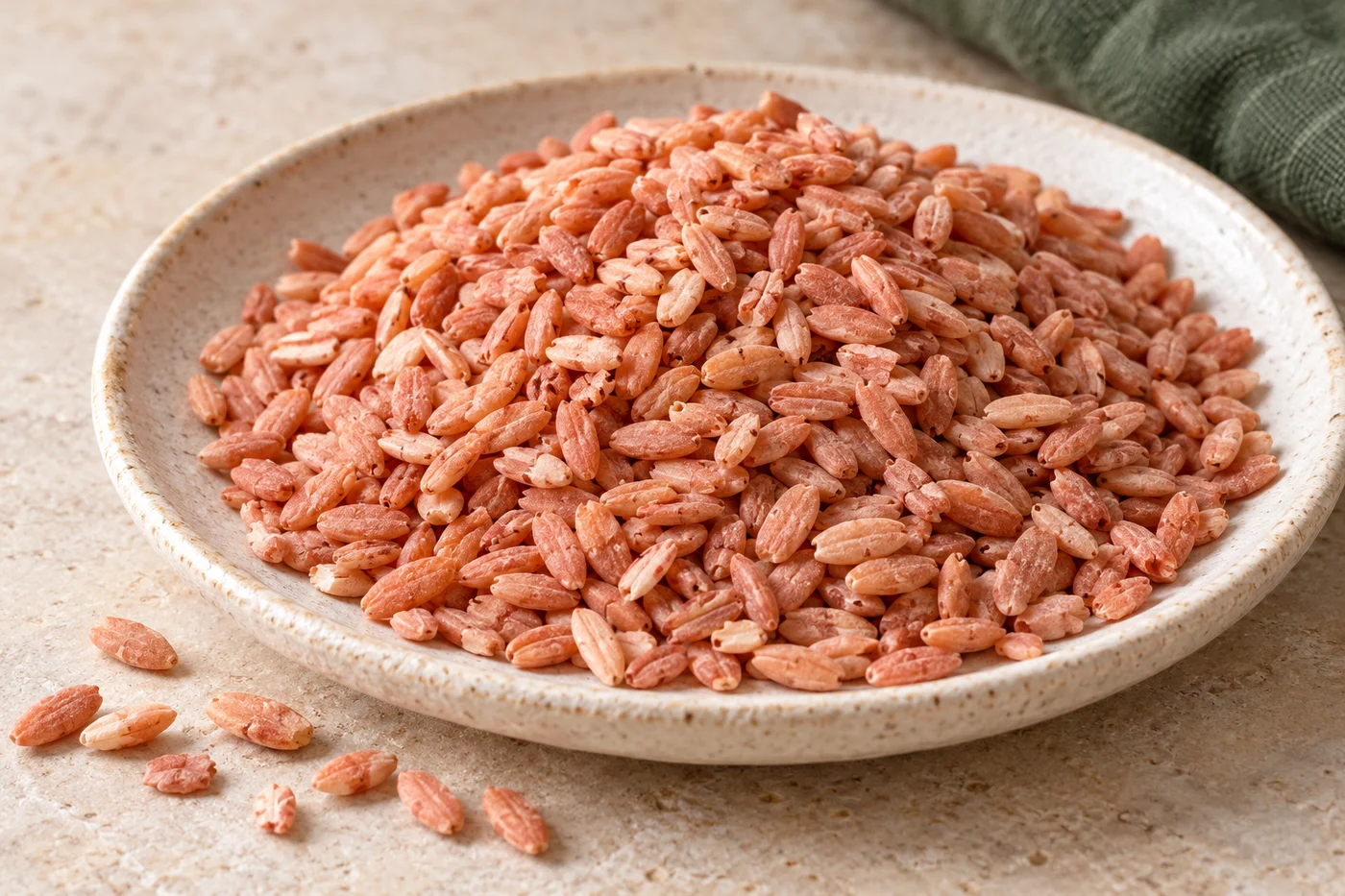
A reddish-brown rice used in Fergana Valley palov. Check the package or ask the seller for soaking and cooking guidance for your particular product.
Basmati
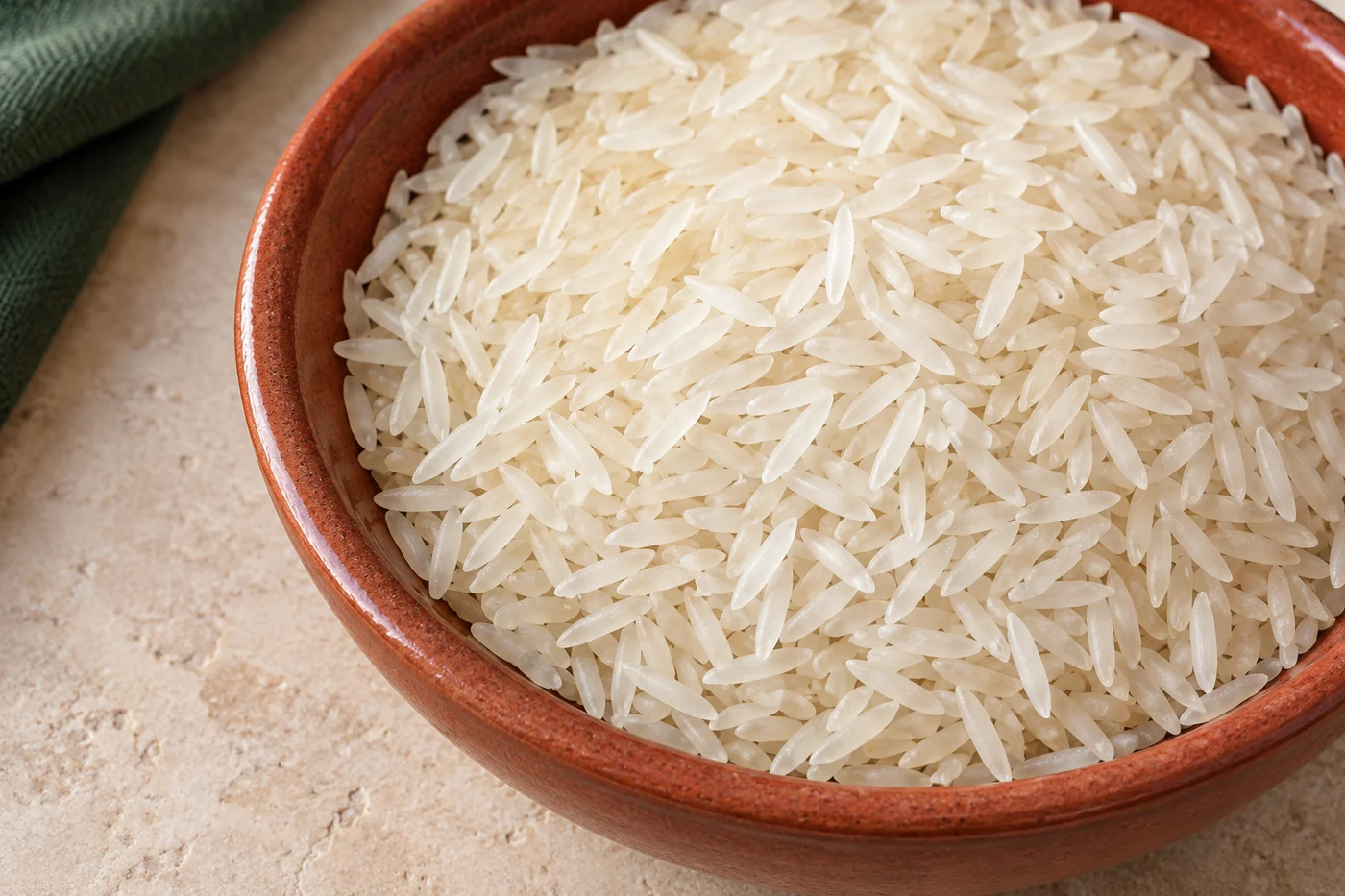
A fragrant long-grain rice associated with India and Pakistan, known for grains that separate when cooked. It need not use exactly the same water quantities or cooking times as devzira.
Cumin
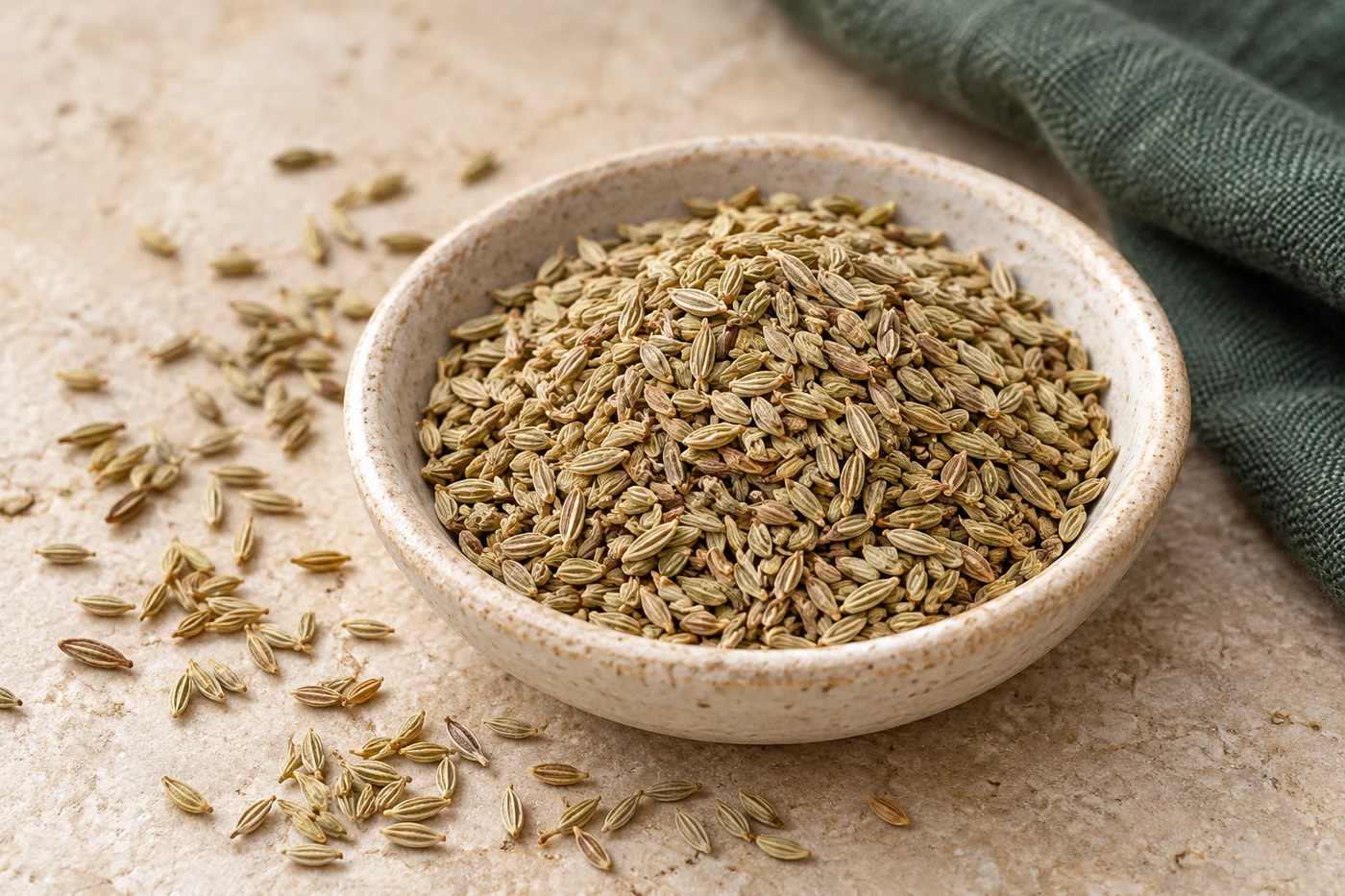
A spice that gives palov its aroma. More is not always better: moderation allows the other flavours to come through. Cumin cannot replace the rest of the recipe.
Saffron
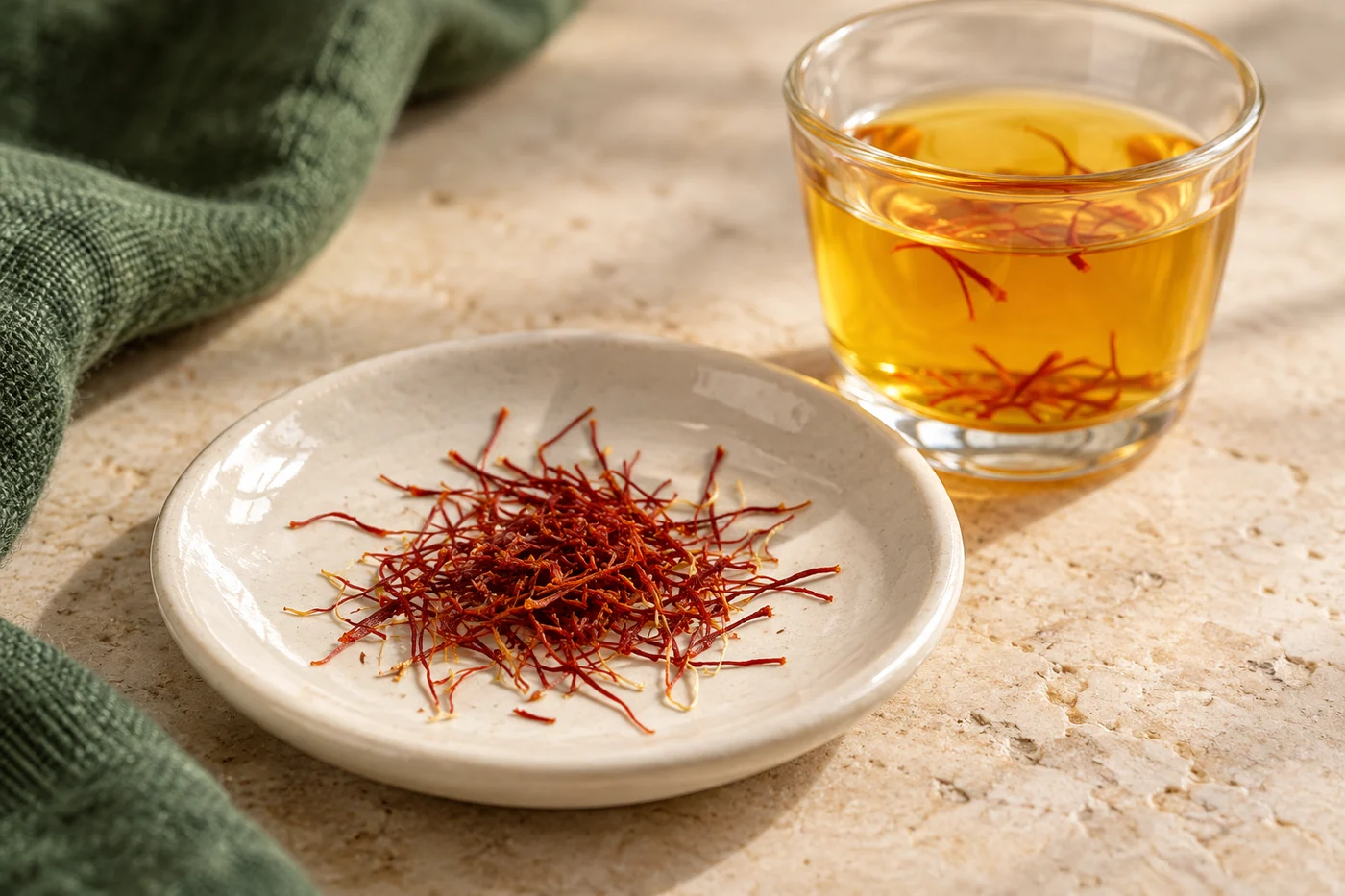
An ingredient that gives colour and aroma to some plov and rice dishes. It features in descriptions of Azerbaijani suzme plov, but is not essential to every type of palov.
Kazan
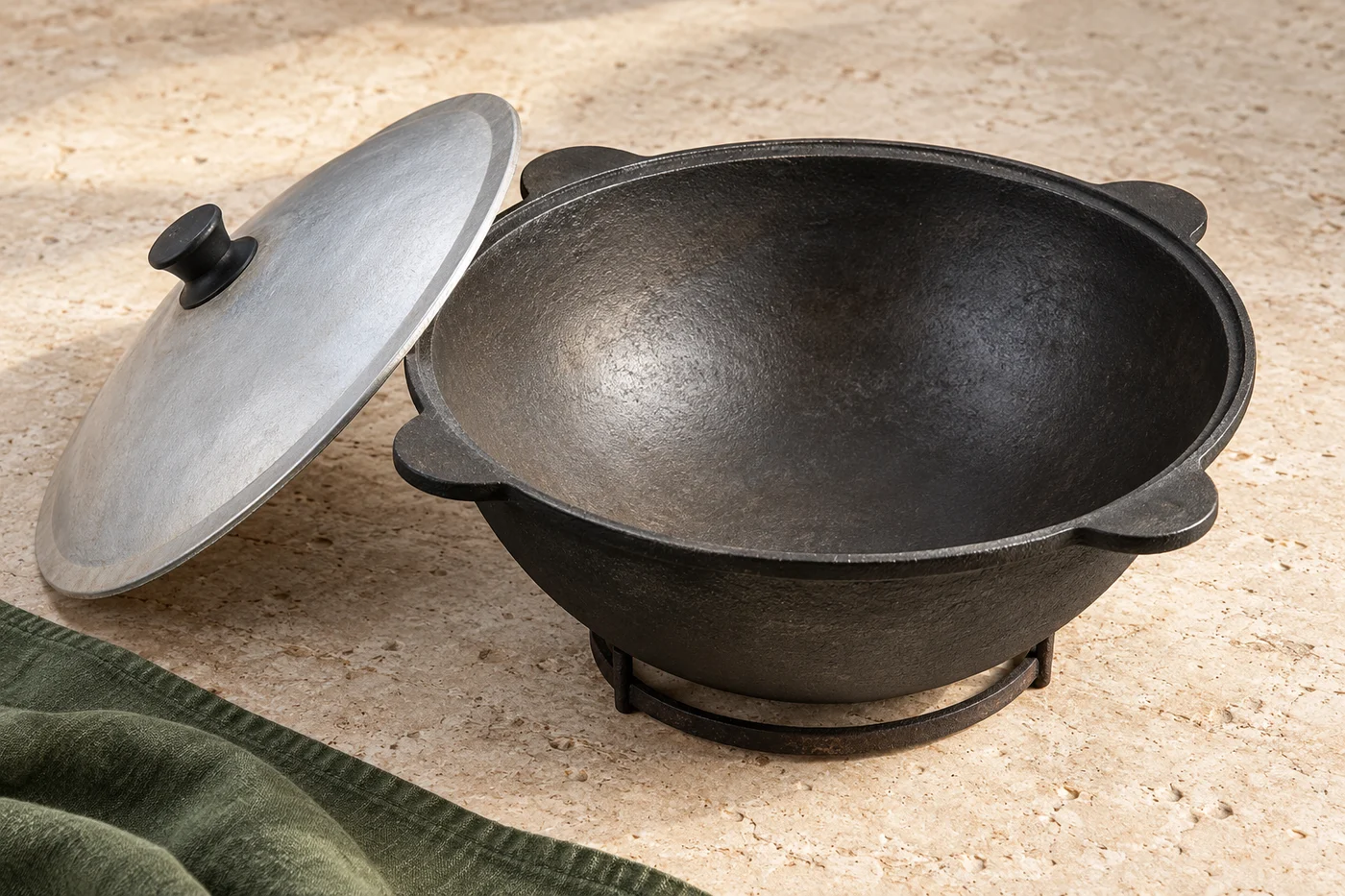
The vessel used to cook palov. Its capacity, wall thickness, base shape and suitability for the heat source all affect control of the process. A large kazan is not always practical on a small hob.
Kapgir: a perforated skimmer
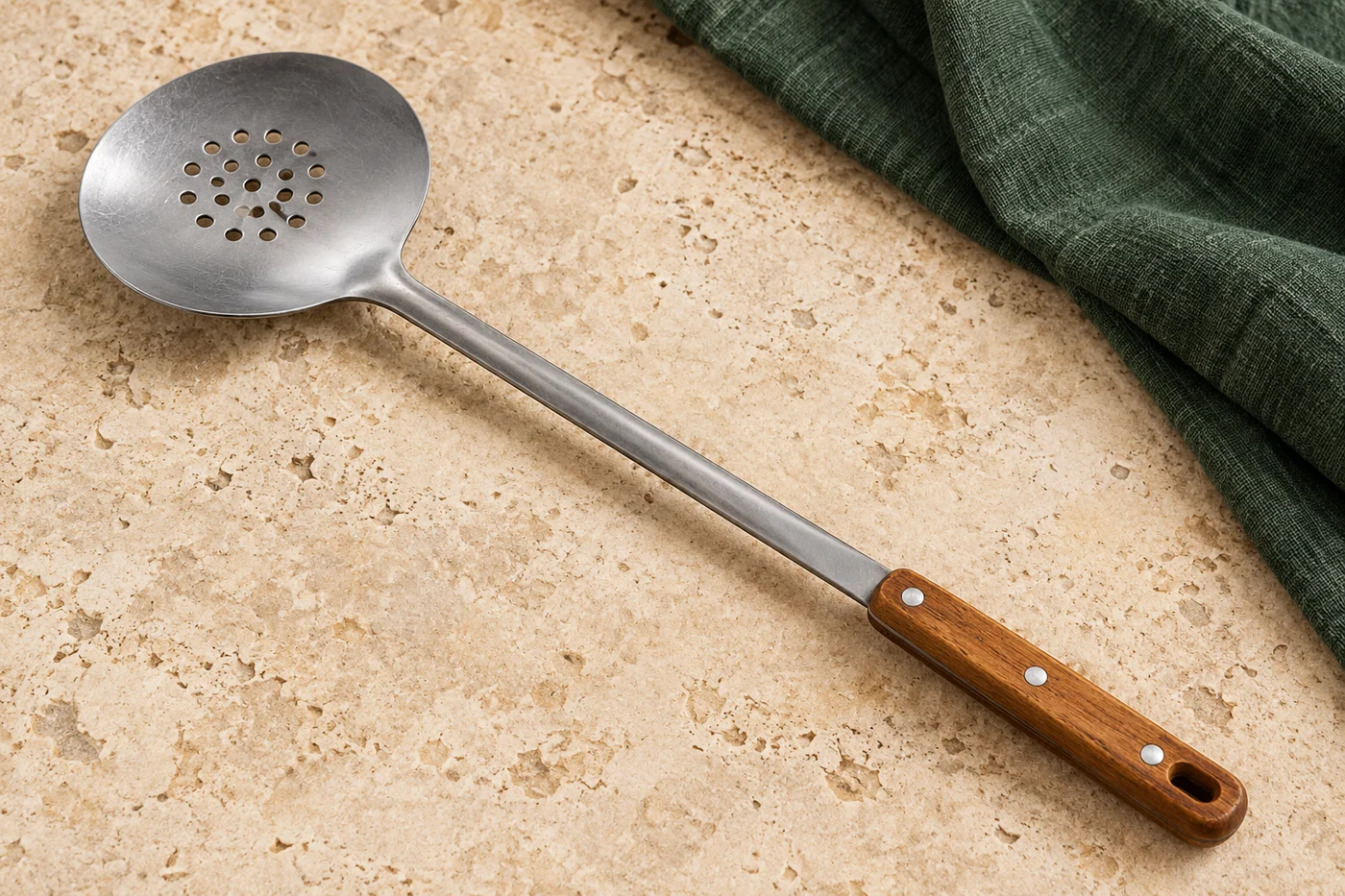
A perforated utensil used to lift ingredients, handle them gently and serve palov. Avoid crushing the rice excessively or scraping the bottom of the pot hard with it.
Carrot strips
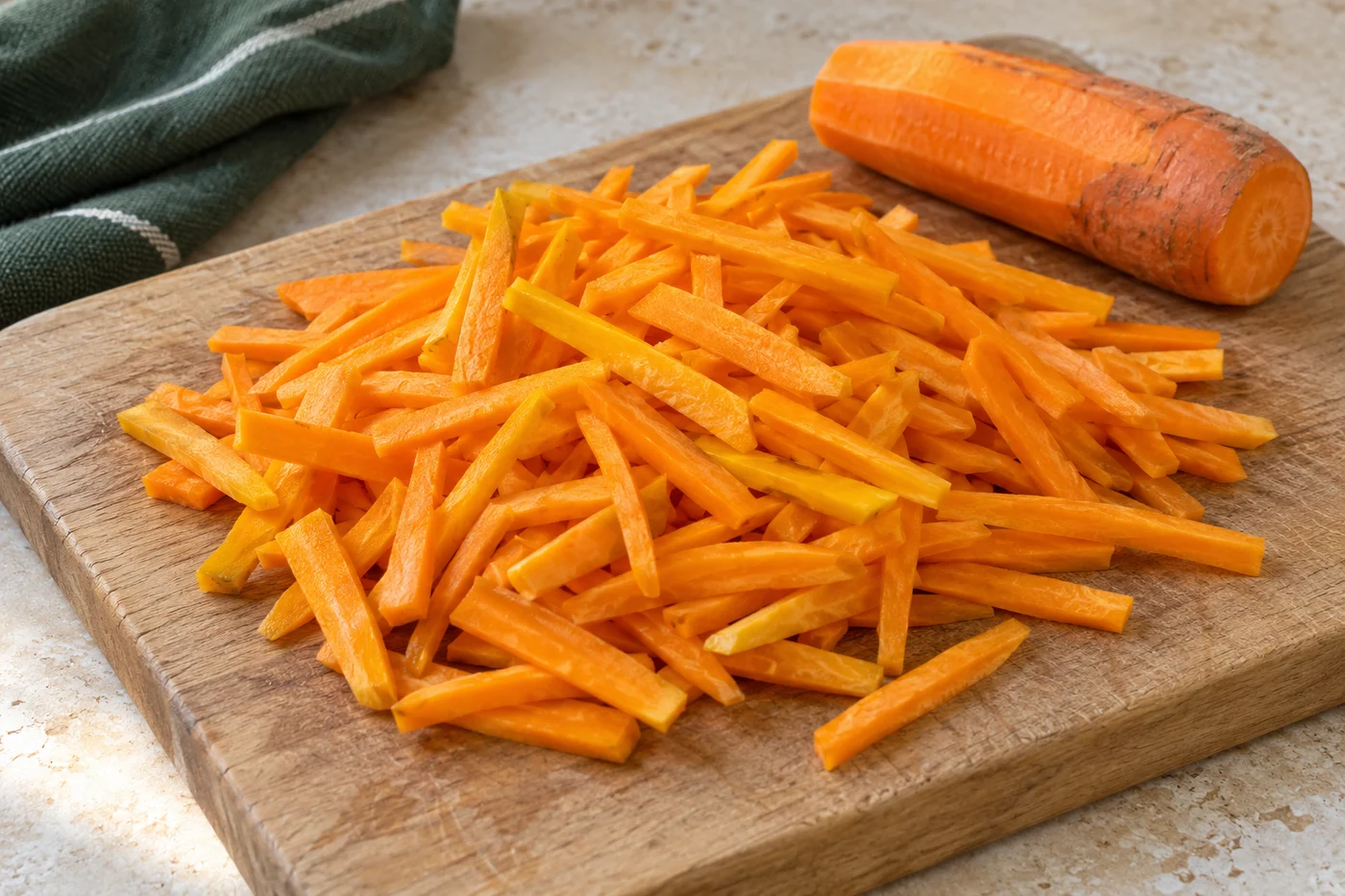
A way of cutting carrots into long pieces of similar size. Uniform cuts make cooking easier to control. Pieces of very different thicknesses may not soften evenly.
Soaking
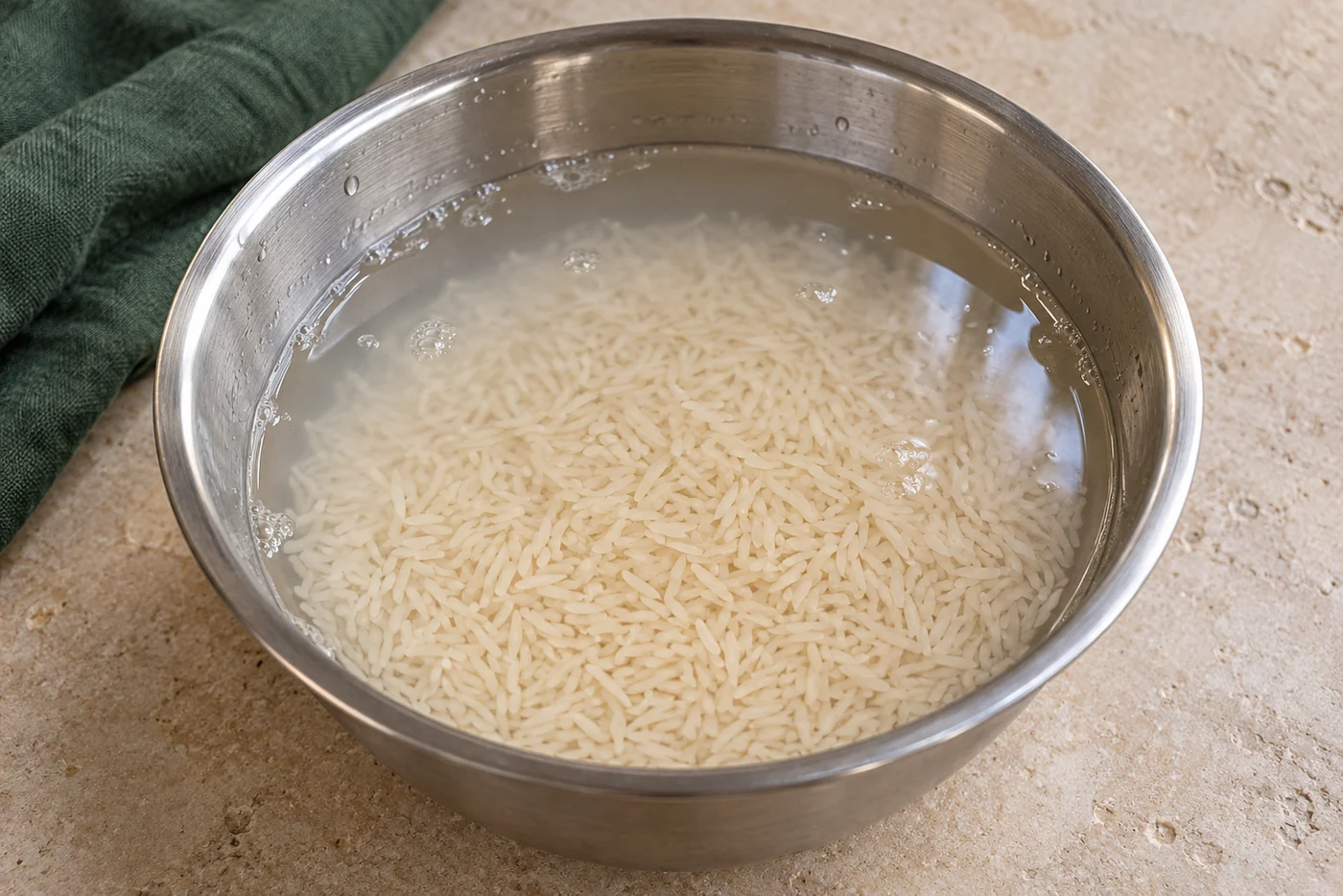
Keeping an ingredient in water for a period of time. Soaking rice and soaking chickpeas do not serve exactly the same purpose or take the same time. Follow the guidance for each ingredient separately.
Suzish: draining or serving
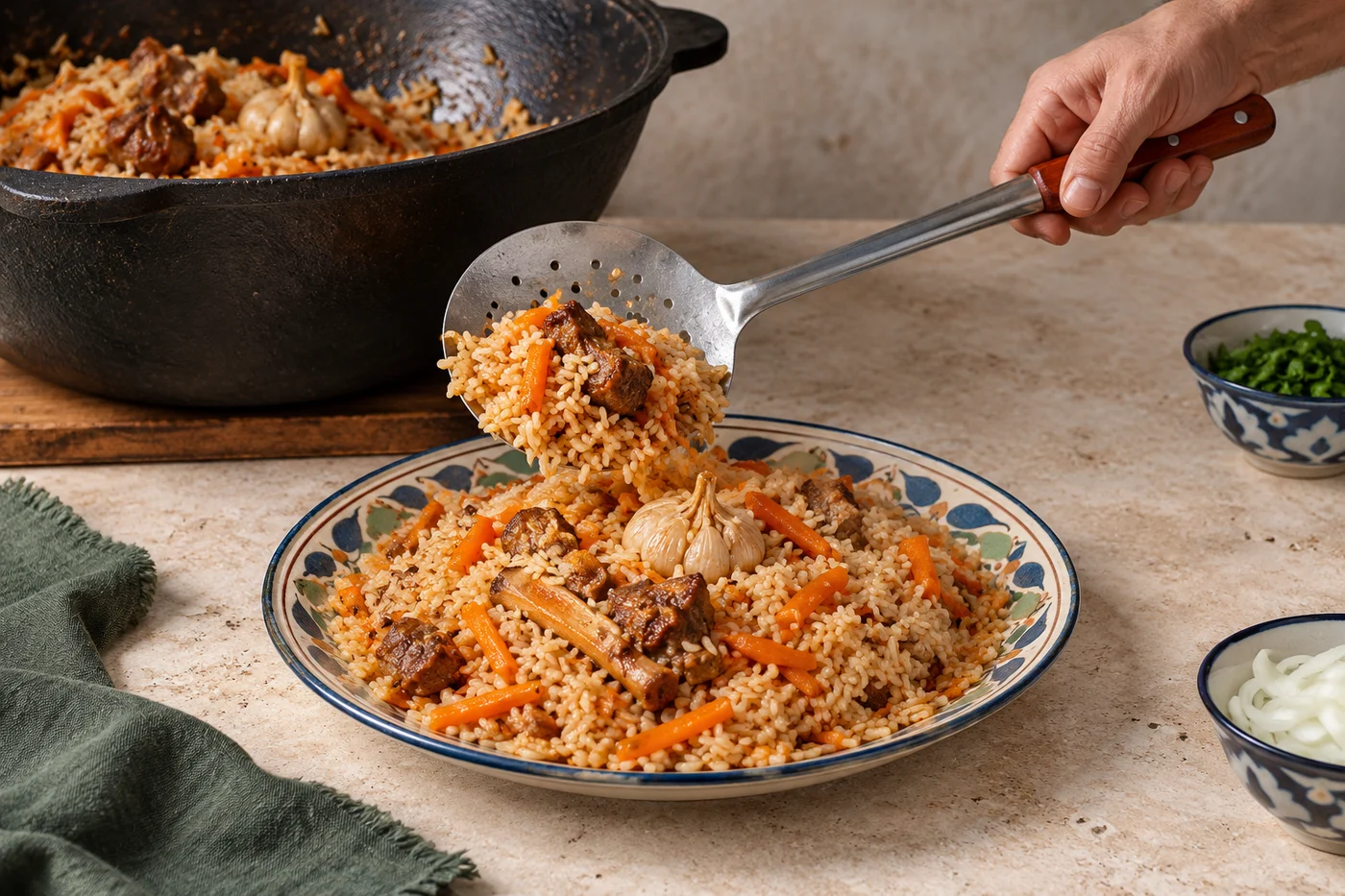
Depending on context, the Uzbek term means separating off liquid or dishing up finished palov. Draining rice for suzme plov and serving palov onto a platter are two different actions.
Suzme plov
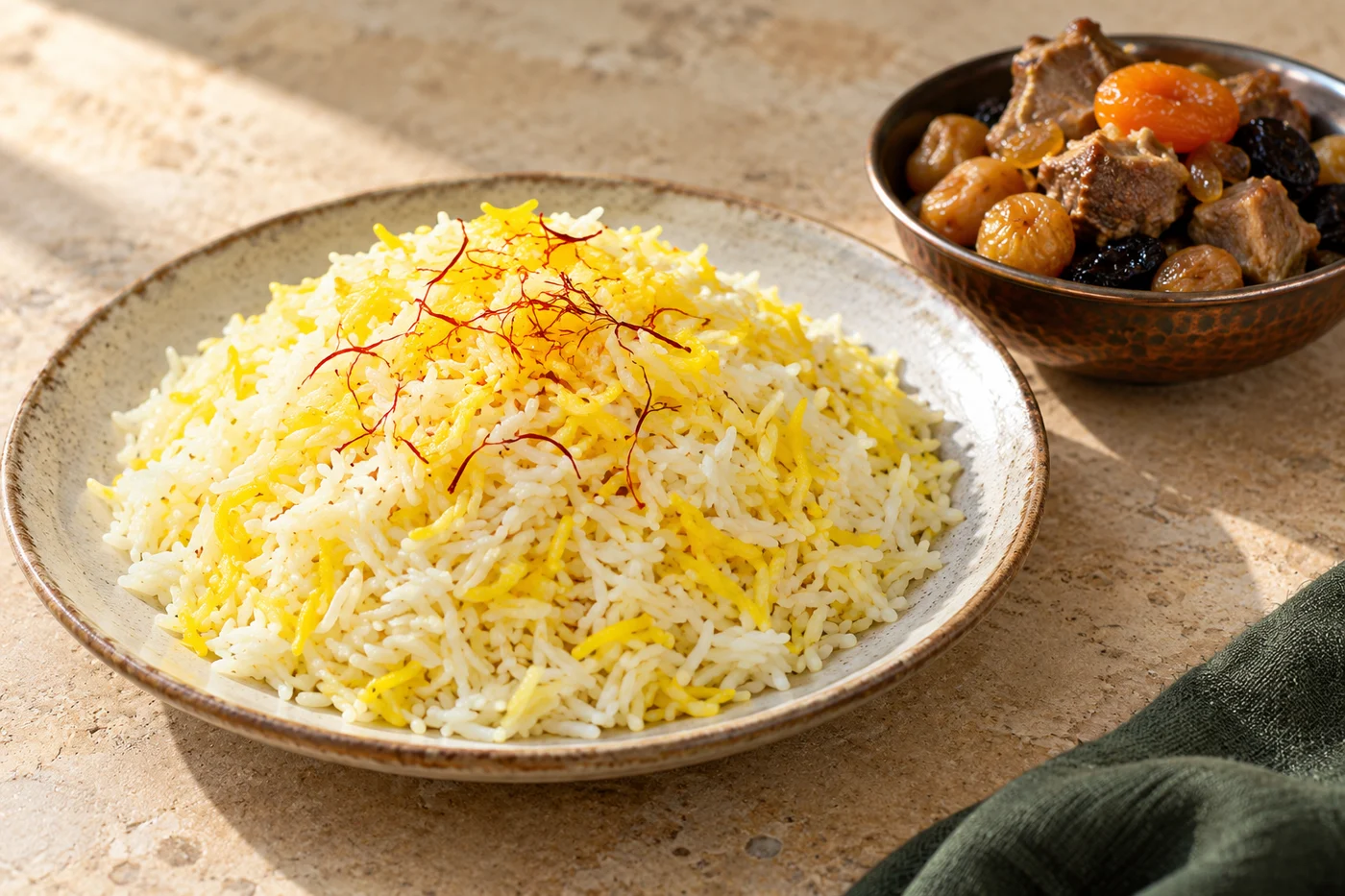
One of the Azerbaijani plov methods. Its defining feature is rice that is partially boiled, drained and then finished with fat in a covered pot.
Qovatok palov
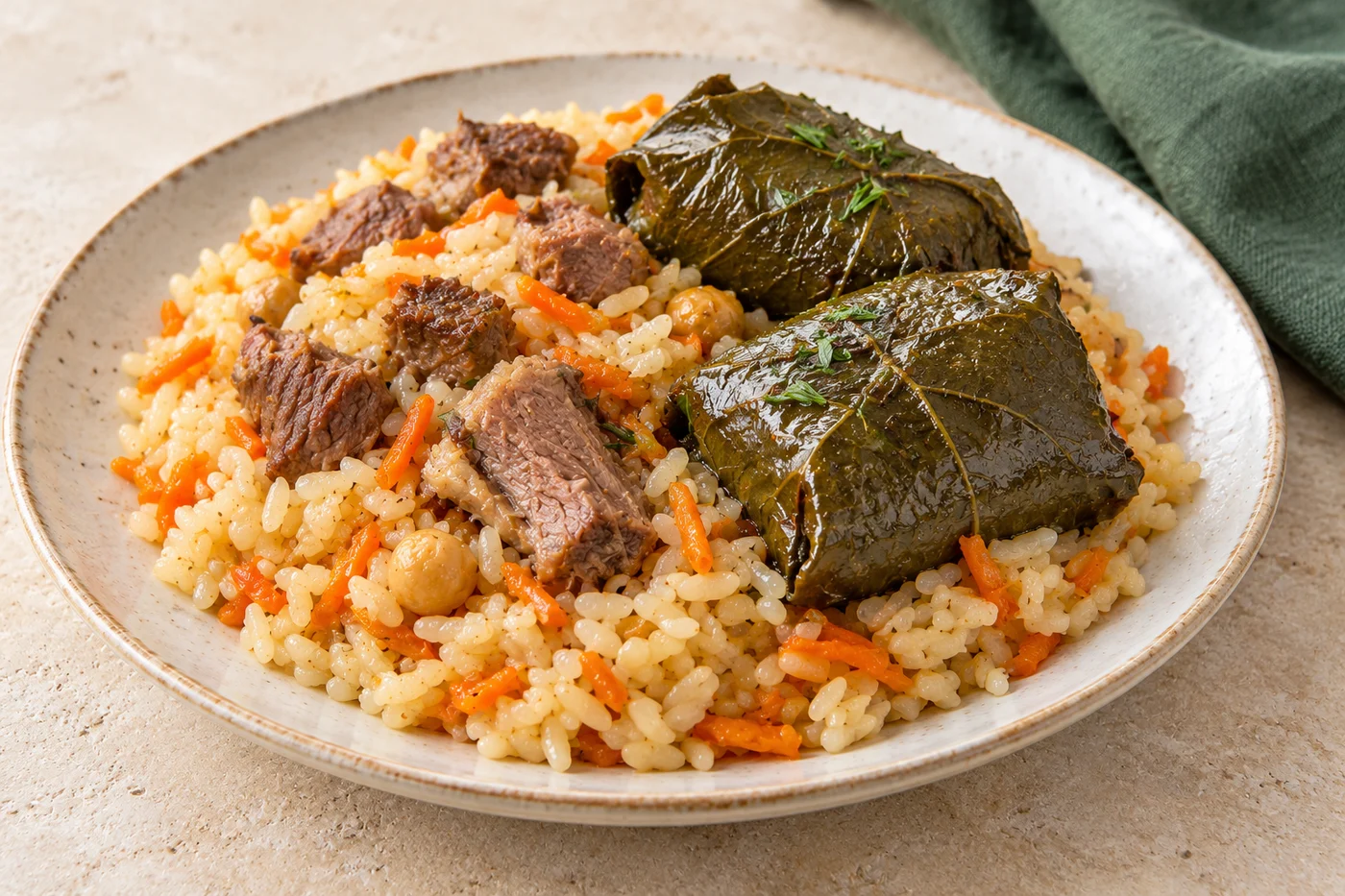
A palov associated with Andijan, made with the addition of qovatok parcels wrapped in vine leaves.
Oshi-sofi
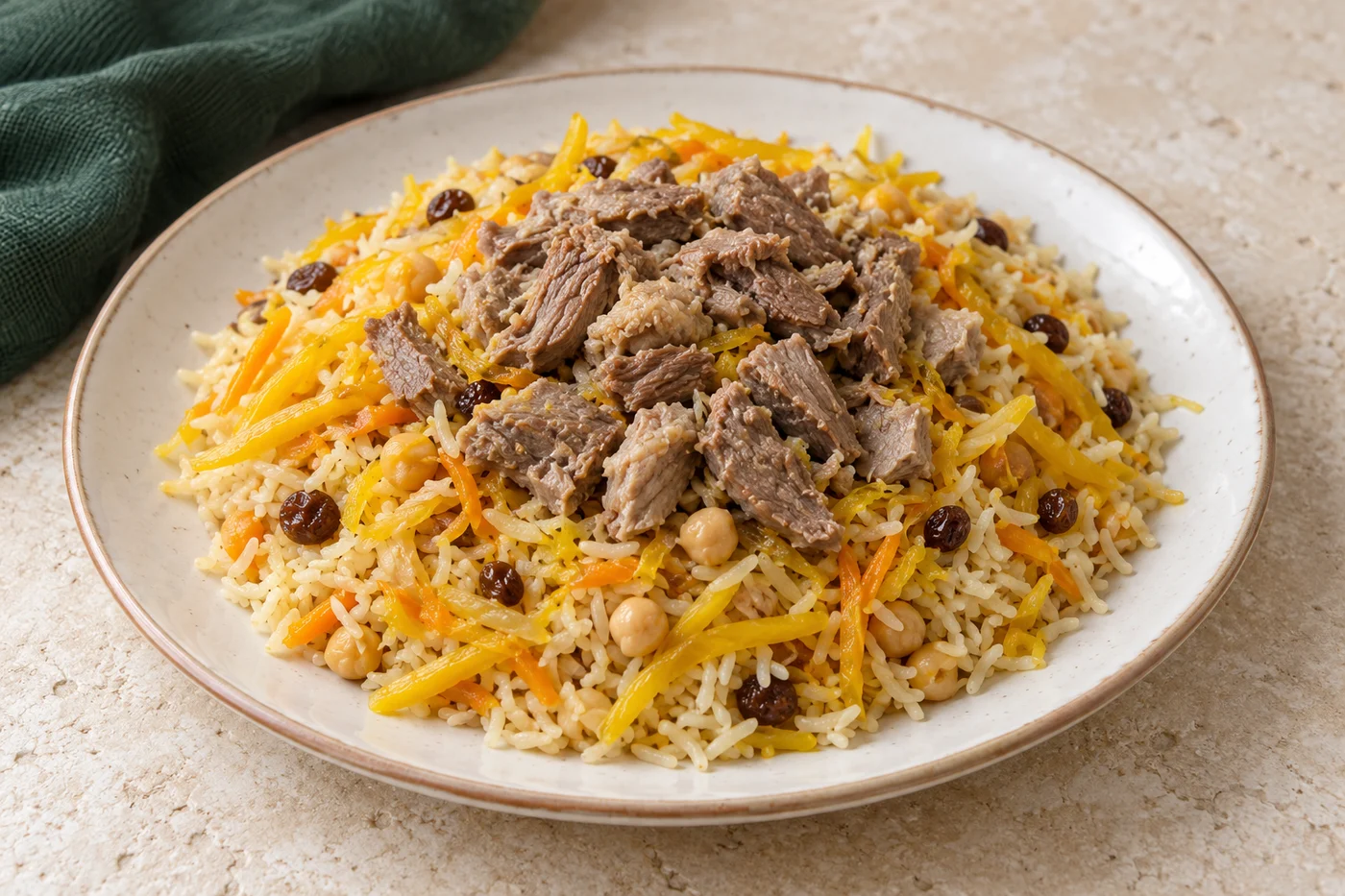
A layered palov associated with Bukhara. One of its familiar features is the distinct presence of rice, carrots and meat.
Layer
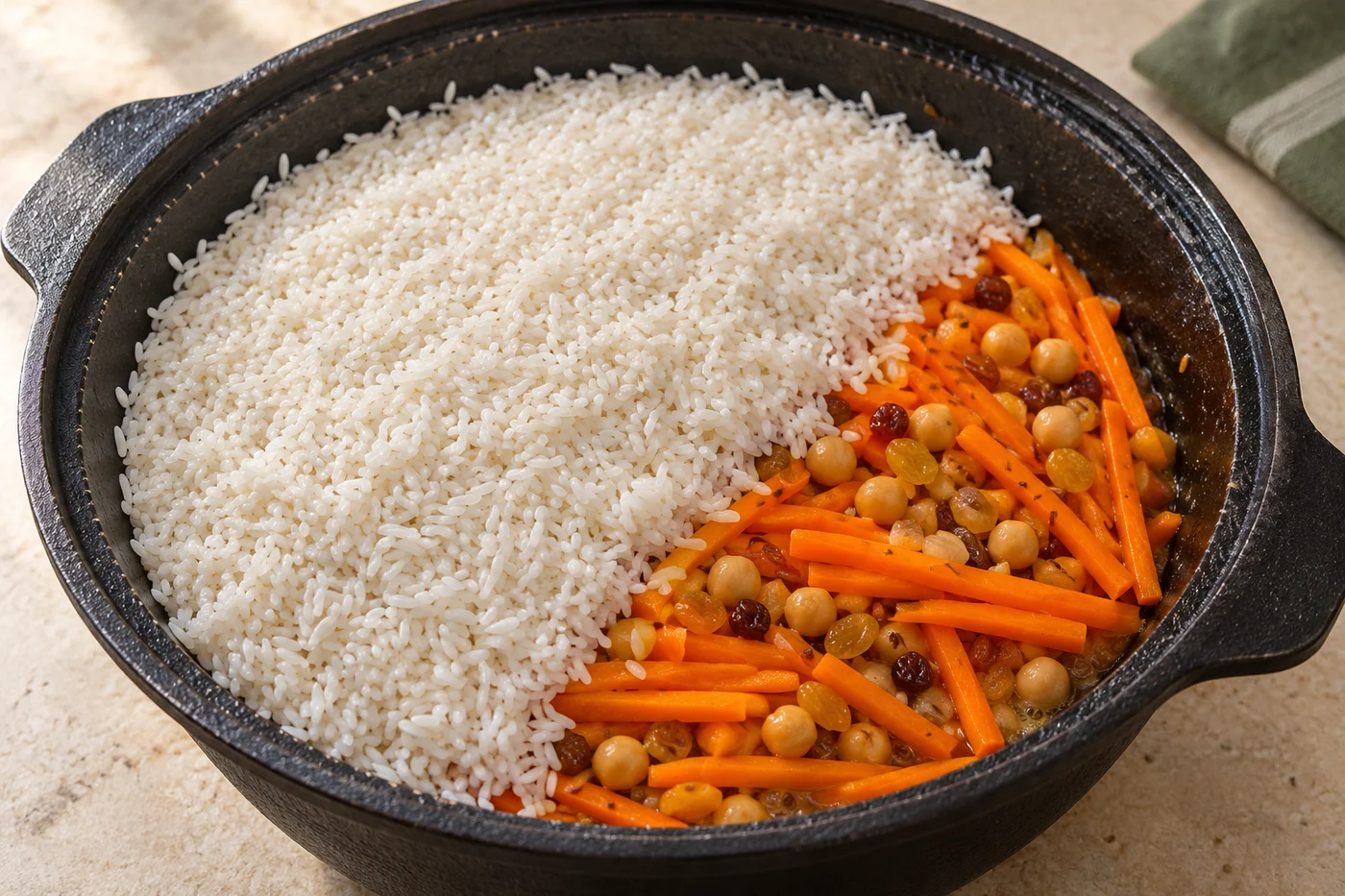
Ingredients arranged one above another in the kazan. Some methods preserve these layers during cooking, while others mix the finished dish before serving.
Separate grains
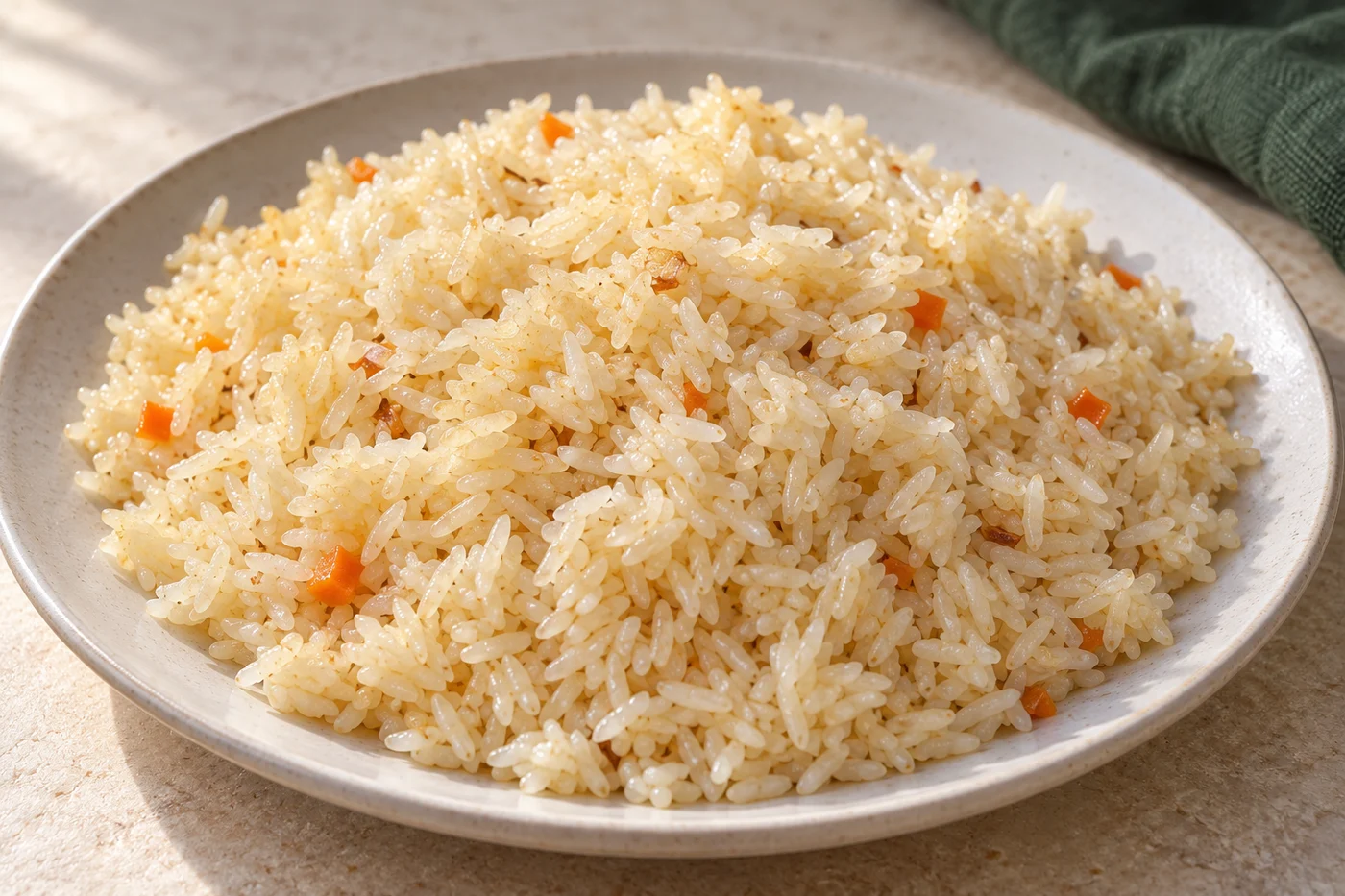
Cooked rice grains keeping their shape and remaining distinct. Separate grains do not mean hard rice: grains can be cooked through without being crushed or mushy.
Serving
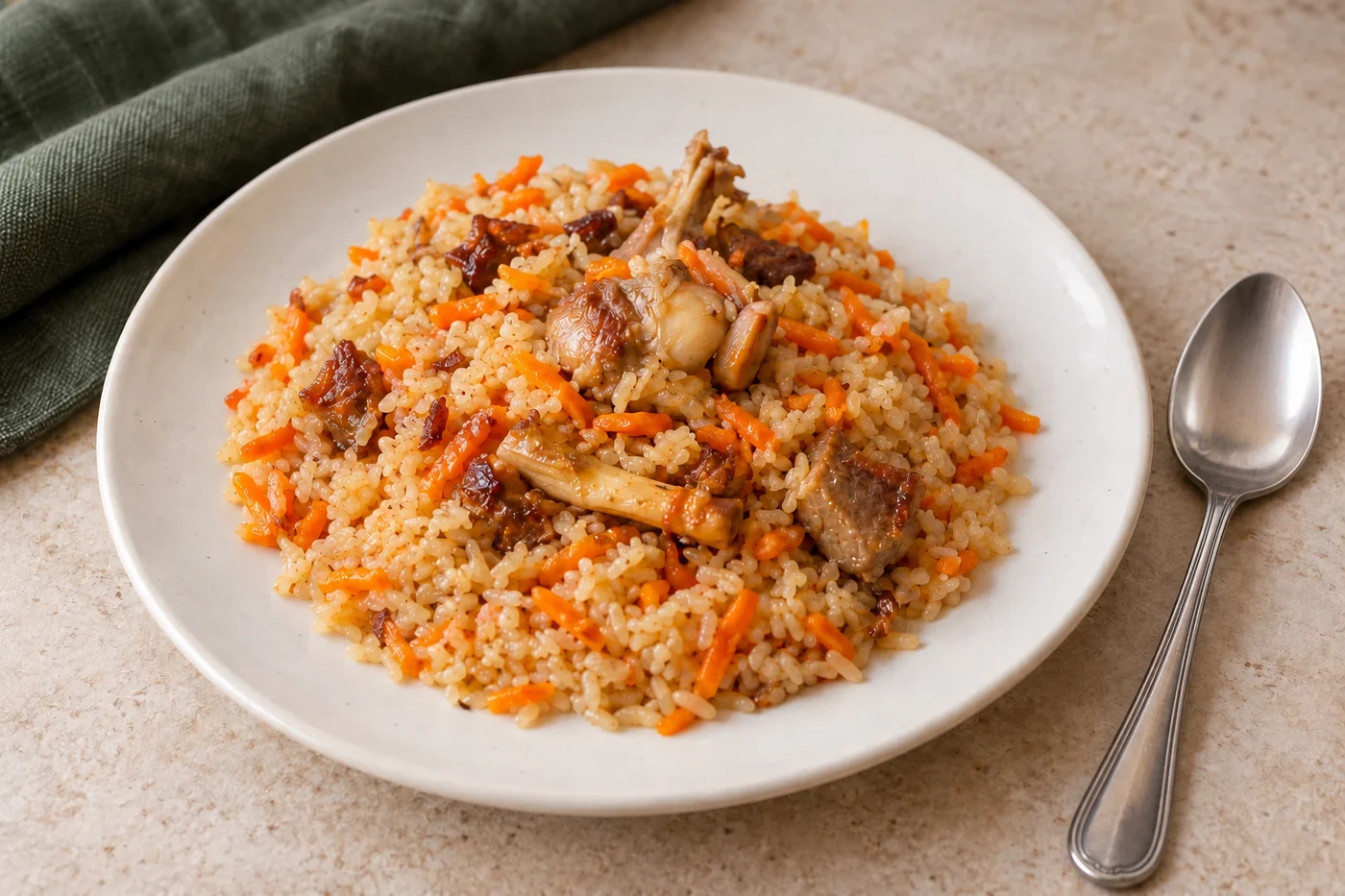
The amount of food intended for one person. Raw rice and finished palov do not weigh the same; water and other ingredients add to the volume of the cooked dish.